You can read the entire interview in Portrait Magazine.
The Special Olympics is an organization that has been working for years to achieve its mission, which is to provide sports competitions and training in various sports for children and adults with intellectual disabilities. What does it mean for you to be the president of such an important organization?
The Special Olympics is a civic organization that has been present in Macedonia for more than 20 years. One of the main goals is to promote greater social awareness, equality, and inclusion of athletes with intellectual disabilities through sports, as well as to help remove systemic barriers for this category of athletes so that they can feel like an equal part of our society in every sense. The goal of this organization, for me, as the president, represents a huge responsibility, first and foremost, to the athletes, as well as to their parents, who are the founders of the Special Olympics organization. My commitment during my term will be to promote national awareness about the athletes of the Special Olympics and the challenges they face, representing Macedonia at international competitions and games and entering the national budget program for sports and sports federations of North Macedonia.
The Special Olympics operates under the license of the International Special Olympics. What are your goals and aspirations as an organization?
We, as an organization, are part of a larger family, the International Special Olympics, with which we are closely connected and work on joint projects, both internationally and with local implications. One of the most important current projects is the project of inclusion in schools in North Macedonia (elementary and secondary), a project for which we are already in communication with the Ministry of Education and Science and the Agency for Youth and Sports, from whom we receive tremendous support. Our goal is to train and facilitate physical education teachers to work with individuals with intellectual disabilities. It has been proven that in countries where full inclusion in schools has been implemented, such as in Romania, for instance, the quality of life of other children is better, they show greater empathy, and, generally, the families of those children are happier compared to before.
As a sports organization, we have enough staff (trained volunteers, defectologists, and assistants) and will for this project; approval of financial resources is currently awaited as technical support from the Ministry of Education and Science, as well as from the Agency for Youth and Sports, to start the project in 2024.
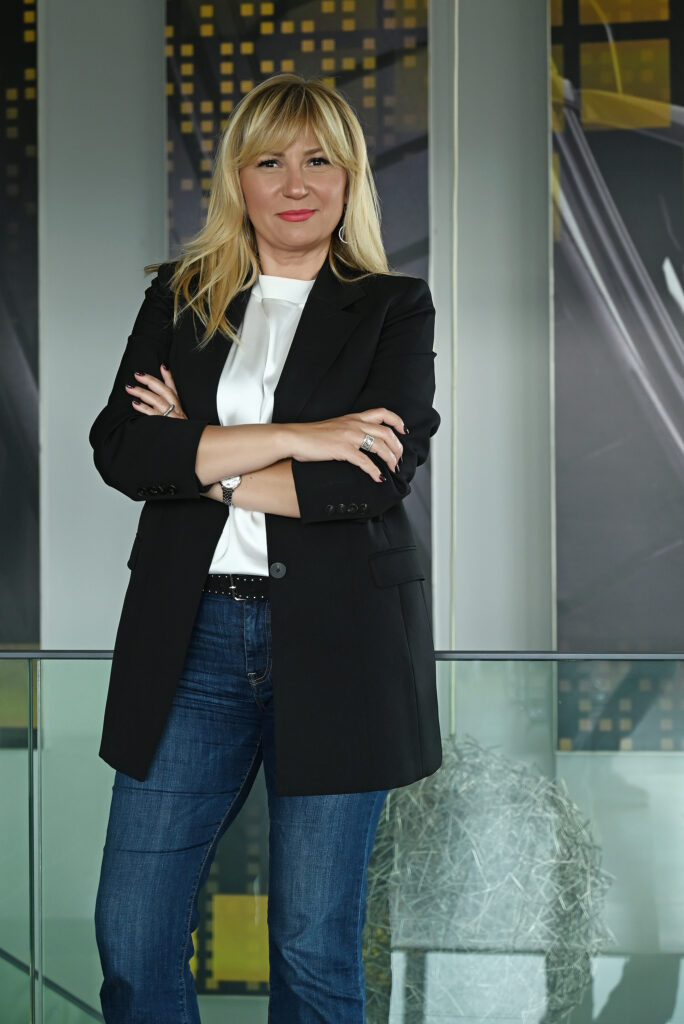
Recently, our athletes participated in the Special Olympics in Berlin. What are your impressions and what results did you achieve?
The participation in the Special Olympics showed that we have great potential. Other athletes also achieved excellent results and demonstrated incredible sports spirit. We proved that we can compete with the greatest world powers, win, and earn medals on the world stage. We are satisfied that we presented the Macedonian state honorably, and proud that our national flag waved five times on the podium in Berlin – an achievement that does not happen every day, nor in any other competitive category. From performances in five disciplines: basketball, swimming, badminton, athletics, and table tennis, the Macedonian representatives won a total of five medals, specifically: Mario Micksovski, swimming, 100-meter freestyle category, bronze medal; Jane Nikodinovski, badminton, bronze medal; Julijana Petrovska, athletics, long jump from a standstill category, silver medal; Stefan Trpkovski, swimming, 100-meter backstroke category, silver medal; and Agron Hajredini, athletics, long jump from a standstill category, gold medal.
For me, every member, representative of our Special Olympics – Macedonia is a winner. Together, we showed how dedication, hard work, and effort guarantee results. We won five medals, but even more importantly – we won the hearts of those present in Berlin, and I believe also in Macedonia. We are truly proud of all our athletes, partners, helpers, and direct participants in these Special Olympics. Congratulations also to the coaches who were by our athletes' sides at every moment, tirelessly supporting them.
Individuals with disabilities are often exposed to discrimination in various layers of society. How should awareness about this marginalized group be raised?
The only tool we have at our disposal is sports, as it as a whole unites and encourages athletes to give their best on the field. Through this, solely with the help of institutions (educational and sports), we can increase awareness of the systemic discrimination faced by our athlete members. The sports arenas should be a place for communal gathering, without competition, accepting all athletes as different yet the same, and things will change for the better.
Athletes from the Special Olympics often need a chance to explore and showcase their potential to find their place in society. How do you, as an organization, promote their development?
By ensuring they receive equal treatment as athletes, we offer a variety of disciplines, allowing them to train in the sports they are interested in, in which they can compete, and most importantly, to be socially accepted by other people and to socialize with them, aiming to reduce stigma or fear among others so that our members can give their maximum. Alongside equality, independence is also something each of them wants to feel.
What activities will be undertaken for the implementation of the annual operational program of the Special Olympics?
Our previous achievements and medals at past Olympics are evidence of the dedication of the Special Olympics team and our investment in the athletes. That must continue uninterrupted and also increase both the number of disciplines we offer and the number of athletes who compete. We need new young members-athletes who will train dedicatedly. For that, financial resources are also needed to provide sports equipment and shoes, as well as exercise equipment for the athletes, and only if we enter the national strategy and budget of North Macedonia will that be achievable and feasible; everything else would be improvisation and, as up to now, just making ends meet. Let us not forget that this is for our most vulnerable, and at the global Special Olympics are among the most successful.
Still, we represented our homeland in Berlin, just as we will at all future competitions where our Macedonian flag always flies at the front of the delegation.
Mario Micksovski, swimmer, Special Olympics of Macedonia
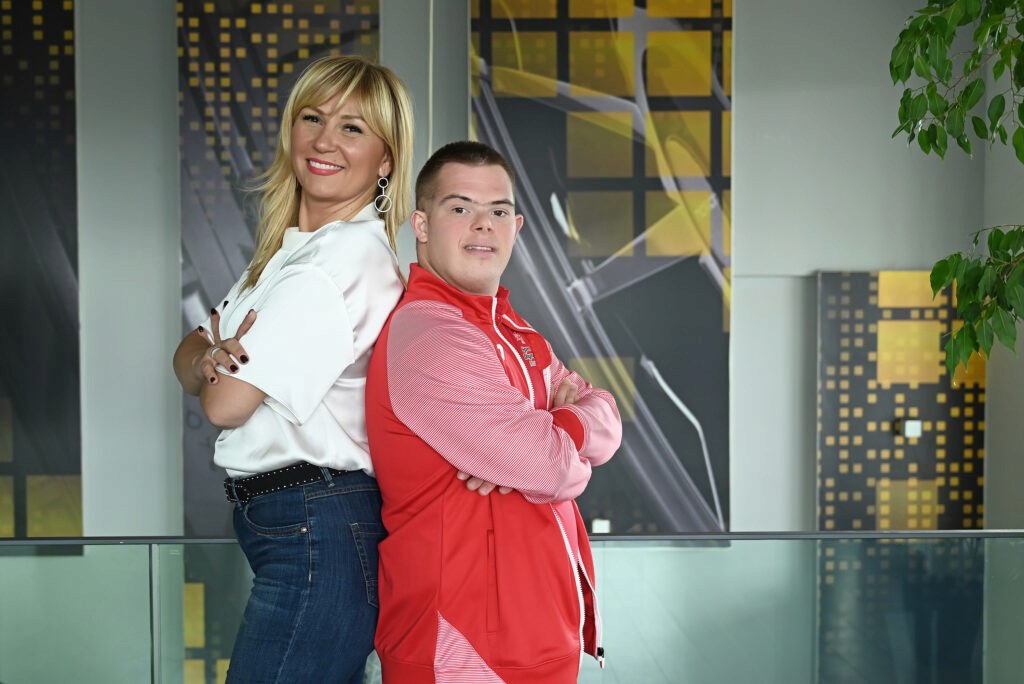
Mario Micksovski is one of the best Macedonian swimmers, who will represent our country at the Summer Olympic Games in Berlin this year. His love for swimming is very great, and his achievements and awards are proof of his dedication and perseverance.
You are a swimmer, our representative at international competitions and a winner of numerous medals and awards. How long have you been training and when did your love for swimming begin?
I have been training for 11 years now, and I have participated in two summer Olympic Games of the Special Olympics. My love for swimming was born the moment I felt the water in the small pool.
Recently you were part of the Summer Olympic Games in Berlin, where you defended the colors of our country. What does it mean to be part of such large competitions and how do you prepare?
I am very happy and proud to have swum for Macedonia. I won a bronze medal, and we returned with many medals and good success.
You have been part of the Special Olympics of Macedonia for several years and together with other athletes have a lot of activities. How satisfied are you with the atmosphere and relationships among you athletes and the coaches who prepare you?
I mostly socialize with the swimmers, but I am happy and enjoy it when we also socialize with other athletes from the Special Olympics, for instance during football week, basketball week, or at some party. Coach Igor is very good to me and shows me how to swim better.